Paw was a CPA with his own business, but first and foremost Paw was a preacher. He was not a typical preacher, he was from southeast Tennessee where his people fought with the Union and he spoke proudly of Dayton’s monkey trial history and stated, his G-d was big enough to do the evolution any way he wished. This stretch of East Tennessee was Western North Carolina when my Knight McKnights moved here.
But Paw was the great orator, and although a liberal left wing preacher of the word, he mostly talked about the places and the people where he grew up and described them in living color. Baylis Washington Harrison Lewis and his good wife Sarah Anne Rebecca Gillespie Lewis and their children and grand children and the in-laws and parents and the places where they would go to visit in and around Spring City and north to the Knight McKnight home near Sevier and picnic along the French Broad River.
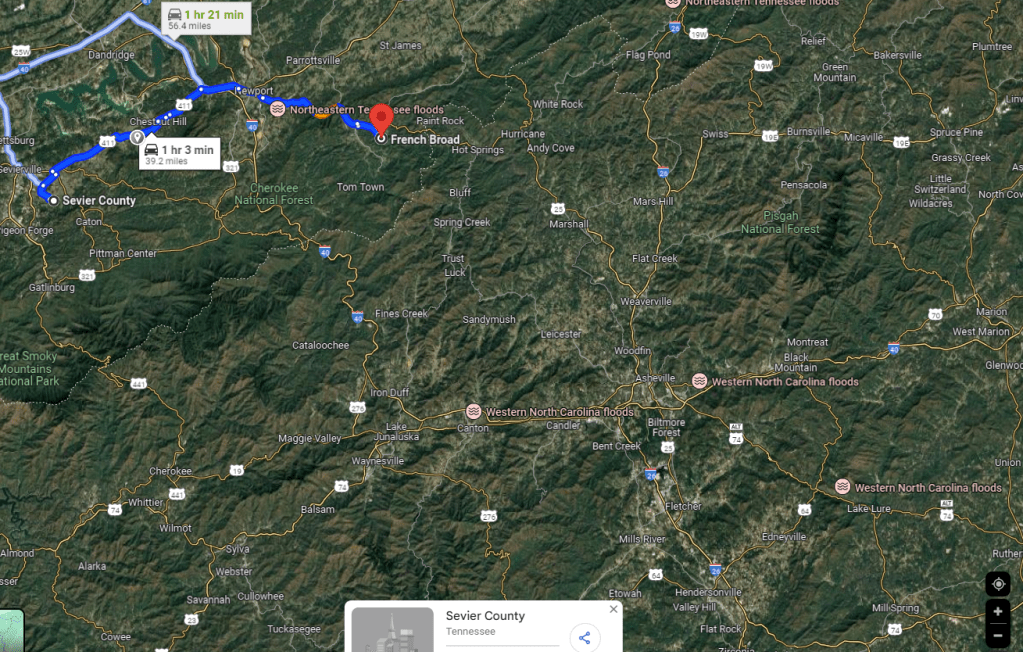
Being the preacher, and a lifelong reader of the word, the story of the family bible being lost in a great flooding of the French Broad, and the Holston to the Tennessee and beyond, might have made the strongest of impressions of the stories he heard from grandparents and parents, Baylis and Sarah and from Jim Knight and Mollie Rose Lewis Knight.
The trail of memories continued back to childhood and traveling farther up the river to go see gg uncle Revd. Richard Dickey Knight (McKnight) in Cocke County where the French Broad is rushing down its hillsides. And then farther back to Paint Rock for riverside trips.
And of course back time and again to take the waters. Bring your own bottles and fill them from the taps. Take the cleanse and drink and bath and thrill in the warming water of the 1,000s of years old hot springs.
Delphia Knight — Philadelphia Ryan Knight, wife of Thomas Knight McKnight Jr. of Sevier County to Rhea County, Tennessee, the paternal grandmother of James Jim Knight — wrote in a letter to her son Richard that
the region’s latest river flood had taken the house and the contents. They had gone to higher ground with the cow and horse. They had not been able to save the family bibles.

Decades later, Paw and family would take the train to Dayton, Tenn., and then the family took them in a wagon and all would have the picnic reunions riverside. Many more decades later he described to me the sun setting into the treetops down the river and I fell in love with the mighty rivers that flow through the mystical mountains.
AI Overview
The French Broad River flows north: From just west of the Eastern Continental Divide.
- Headwaters: The French Broad River’s headwaters are located in Rosman, North Carolina, near the South Carolina state line.
- Route: The river flows north through Brevard, Hendersonville, Asheville, and Marshall, North Carolina. It then crosses into Tennessee at Paint Rock in Cherokee National Forest.
- Junctions: The French Broad River joins the Holston River near Knoxville, Tennessee, to form the Tennessee River. The Tennessee River then flows into the Ohio and Mississippi rivers, eventually emptying into the Gulf of Mexico.
The French Broad River is one of the few major rivers in the United States that flows north. It’s believed to be around 250 million years old and is considered one of the world’s oldest rivers.
The French Broad is also one of the oldest rivers in the world. Up the road is the New River, older – but one point made in Google’s AI is that the New River and the French Broad River are so old that they may be older than the North American continent as we know it.
Both of these rivers are in the list of the world’s seven oldest rivers which includes the Nile. The oldest is debated but thought it is in Australia, the Finke River, which the Australians call Larapinta. The Susquehanna River is also among the world’s oldest.
There are lots of stories for countless years of the great French Broad leaving her banks in search of its streams and creeks and washing away the dusts of the ages time after time.
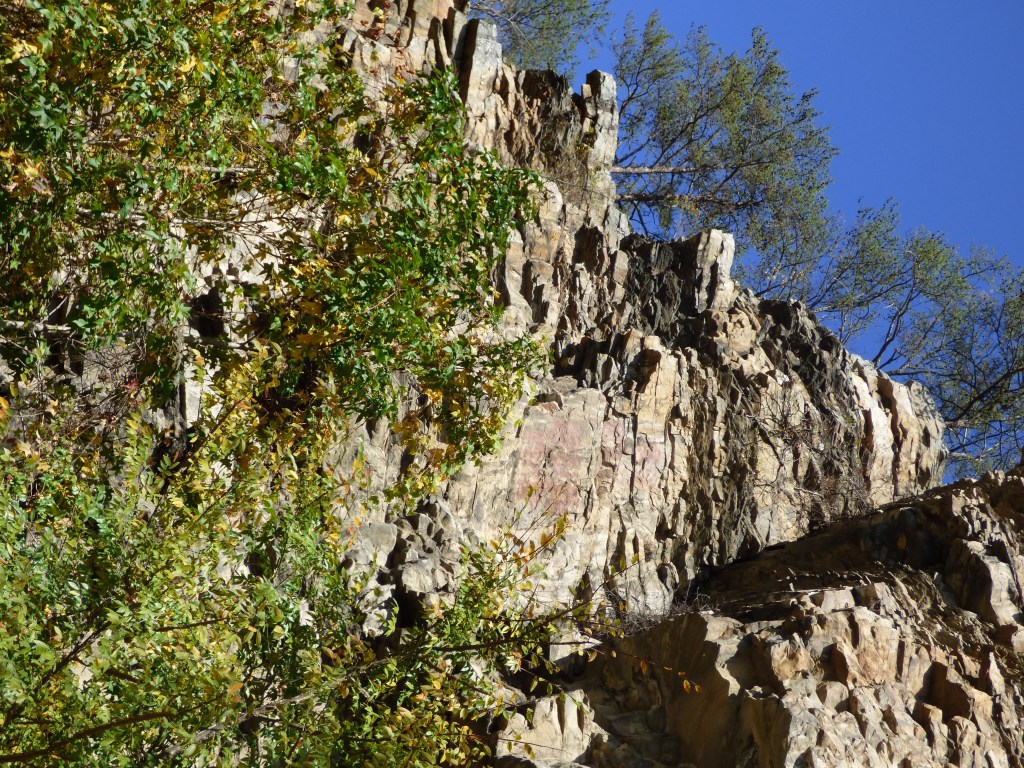


Petroglyphs grace the many stories-high rock faces up the river as it leaves the Carolina mountains and then it turns to Tennessee. Today its course is all different, it was dammed and harnessed with man-made courses directing the waters, where the many rivers meet, and where they go and how long they flow, and how deep they sit.
Just west of the Eastern Continental Divide
There are several times in written memory of the great rivers flooding their banks and changing the landscape. The entire waterways network has a beginning near Rosman, North Carolina and these waterways flow and meet up to join such greats as the Holston, the Tennessee and eventually the Gulf of Mexico. The waters the storms gather out of the Gulf fly through our skies, wash the earth and flow back again.
But we forget and then it happens again just like it always does – two and more storms meet over this watershed. Mother Nature shows all who is boss.
And we have other stories of the floods – just one year ago this week a local newspaper wrote of the devastating flood of 1916
– October 7th 2023
Google AI Flood timeline
The biggest recorded floods in 200 years of WNC history (as of December 2007):
- 1796: Fourth week of August.
- 1800s: A flood during the century’s first decade changed the course of the Swannanoa River in Beverly Hills.
- 1852: Aug. 28.
- 1891: Feb. 22.
- 1901: The flood of May 20 saw the French Broad River overflow in Madison and Buncombe counties.
- 1905: The July 11 flood affected the French Broad River and Hominy Creek.
- 1916: Both the French Broad and Swannanoa rivers overflowed on July 16.
- 1928: The Aug. 15 flood affected east Buncombe and McDowell counties.
- 1940: The Tuckaseegee River flood of Aug. 30 hit Haywood and west Buncombe counties, especially Marshall.
- 1946: The Aug. 14 flood affected east Buncombe and McDowell counties, particularly Canton.
- 1973: On May 28 the Hiwassee River flooded parts of Haywood and south Buncombe counties.
- 2004: Parts of Haywood County were flooded on Sept. 8 and Sept. 17.
- 2024 the flood

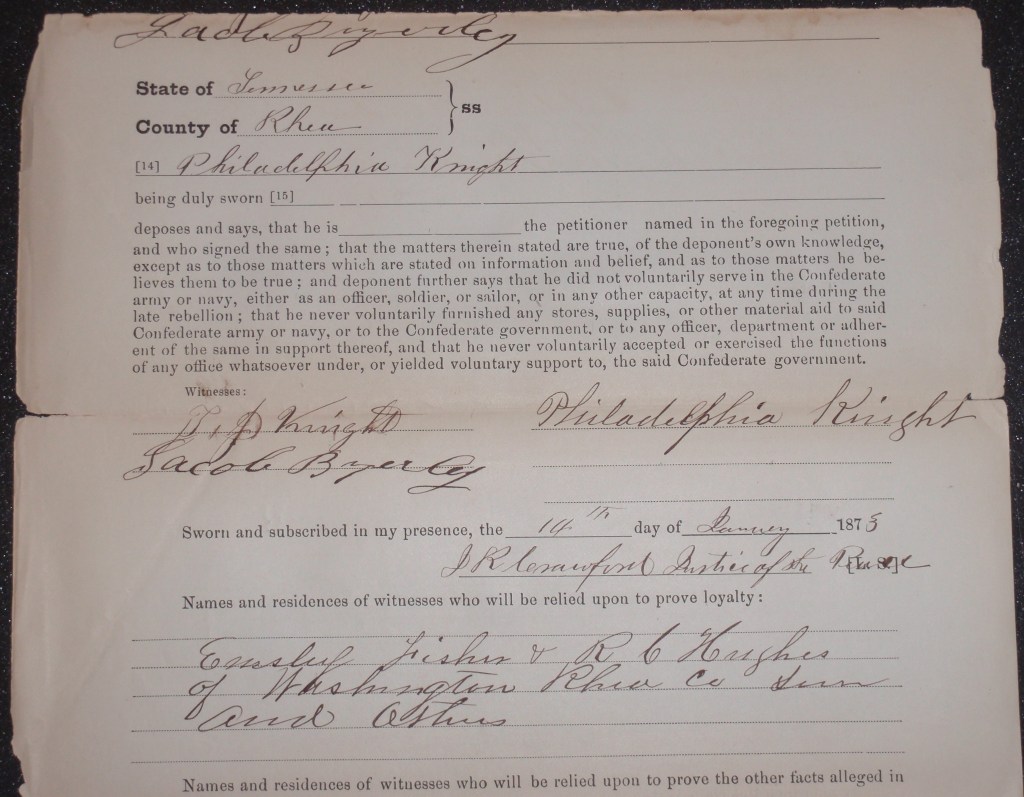
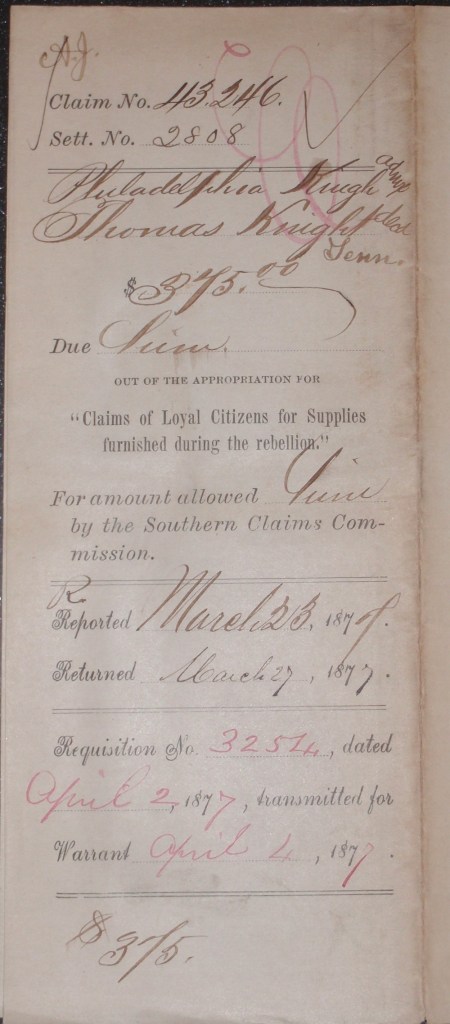

Delphia would have loved the book The French Broad – she would have known countless of the families – The only mention of the Knights in the book is Mary – but which Mary remains to be seen. Delphia’s photo from Virginia Knight Nelson’s book Rhea County Families. Don’t you just love signatures! This tells us if one could write or used an X. Her penmanship is better than mine. These are from her records from the Southern Claims Commission that she lost money in the war and it is stated and vouched that she did not support the confederates. Last Baylis and Sarah who seemed to be much the teller of history to Paw.
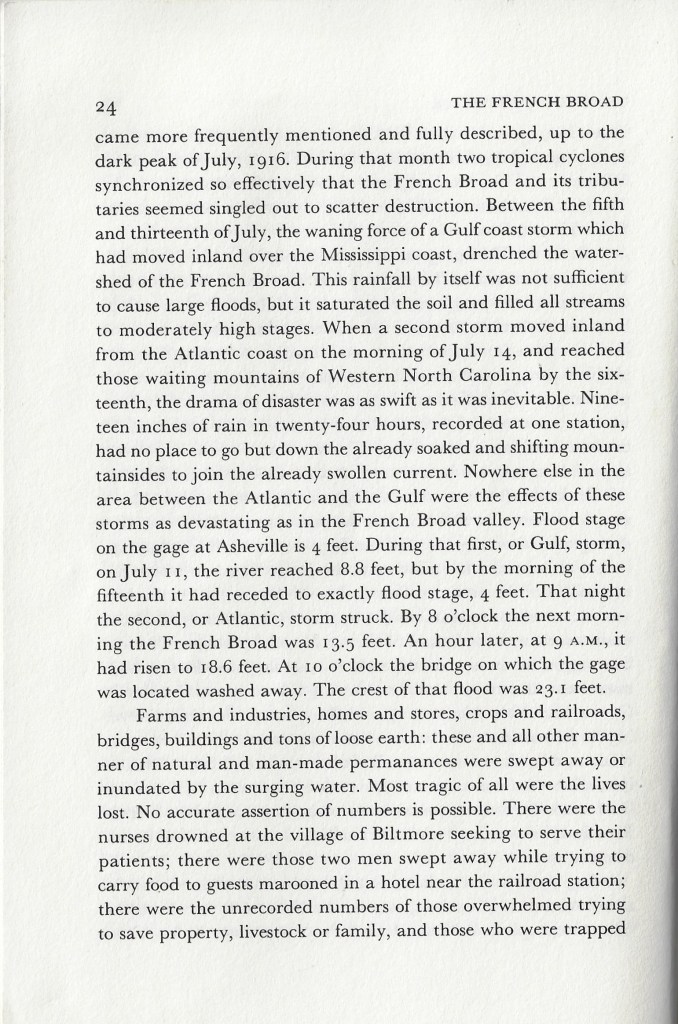
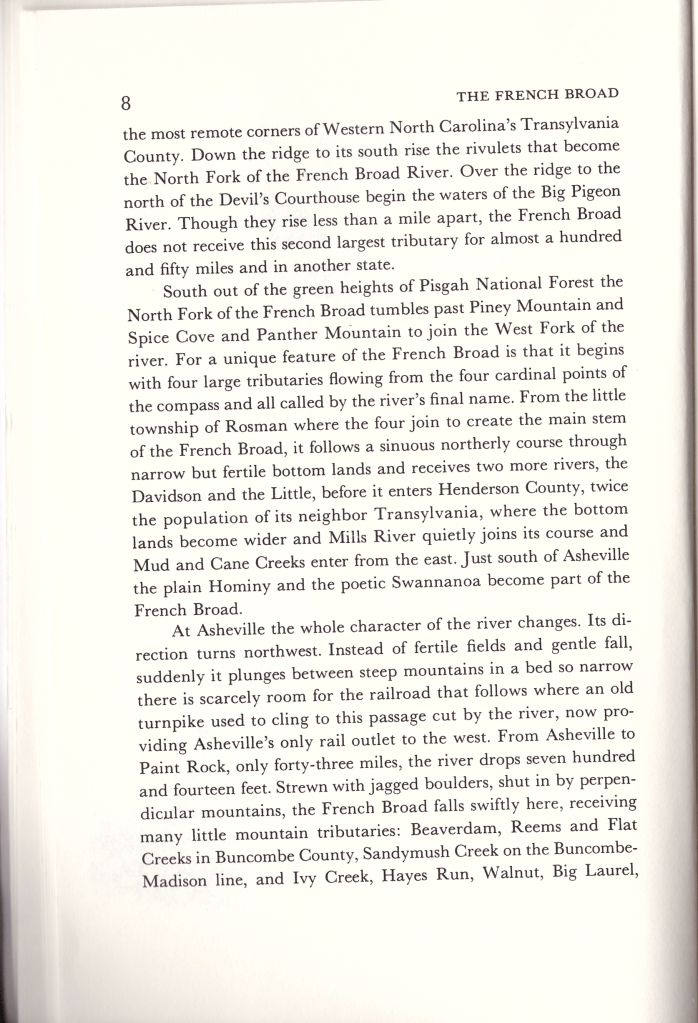
Wilma Dykeman in her magnificent book The French Broad writes about the floods. On pages 24 and 25 she speaks of the great flood of 1916.
Just like the great flood of 2024, the flood of 1916 happened with two storm systems meeting. Wilma Dykeman described how there had been one storm there for a number of days, bringing lots of rainfall, and then another storm came in and the two systems combined had left the people of and around the river at the mercy of high waters that took many lives and property. And she noted several other times the rivers flooded.
Beginning on page 23 of Wilma Dykeman’s book The French Broad: In 1791 a scarcely documented flood occurred in the whole area, which Davy Crockett, over on the Nolichucky (river), described as “the second coming of Noah’s Fresh.” From that date on, floods became more…
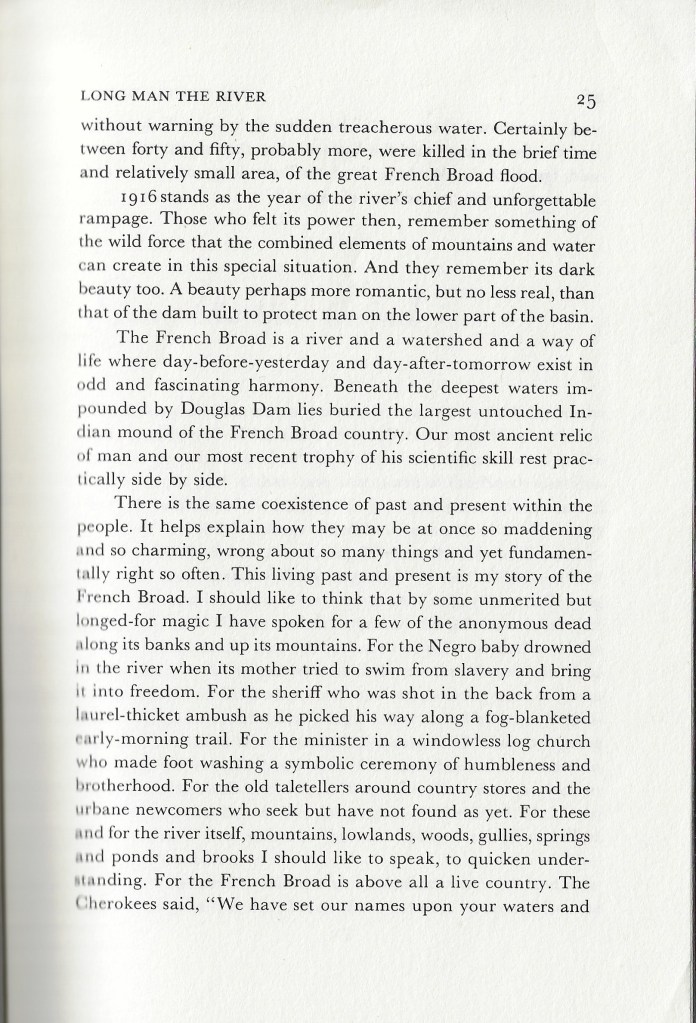
“…and you cannot wash them out.” They were right – the Nolichucky and the Swannanoa and the Estatoe (as well as the French Broad) but they might also have said, for all of us, “We have lived our lives along your rivers and you cannot wash the memory of us out. P. 26
More from The French Broad of particular interest about the course of the river and the rivers, creeks and streams it meets along its way:

https://en.wikipedia.org/wiki/Wilma_Dykeman
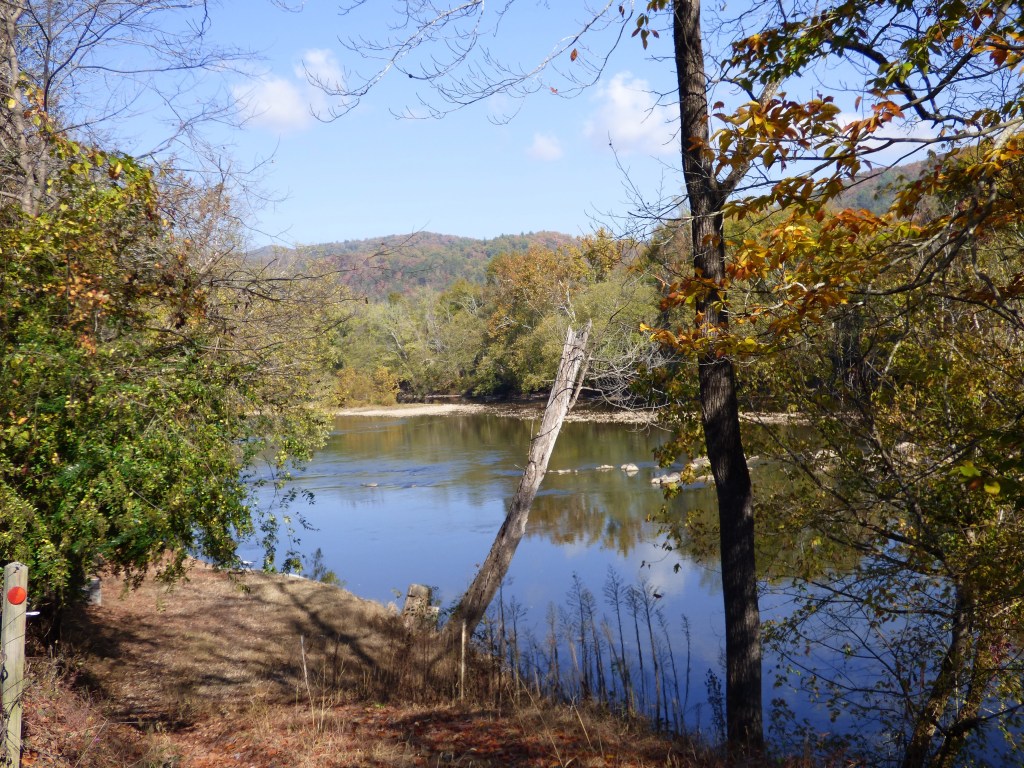
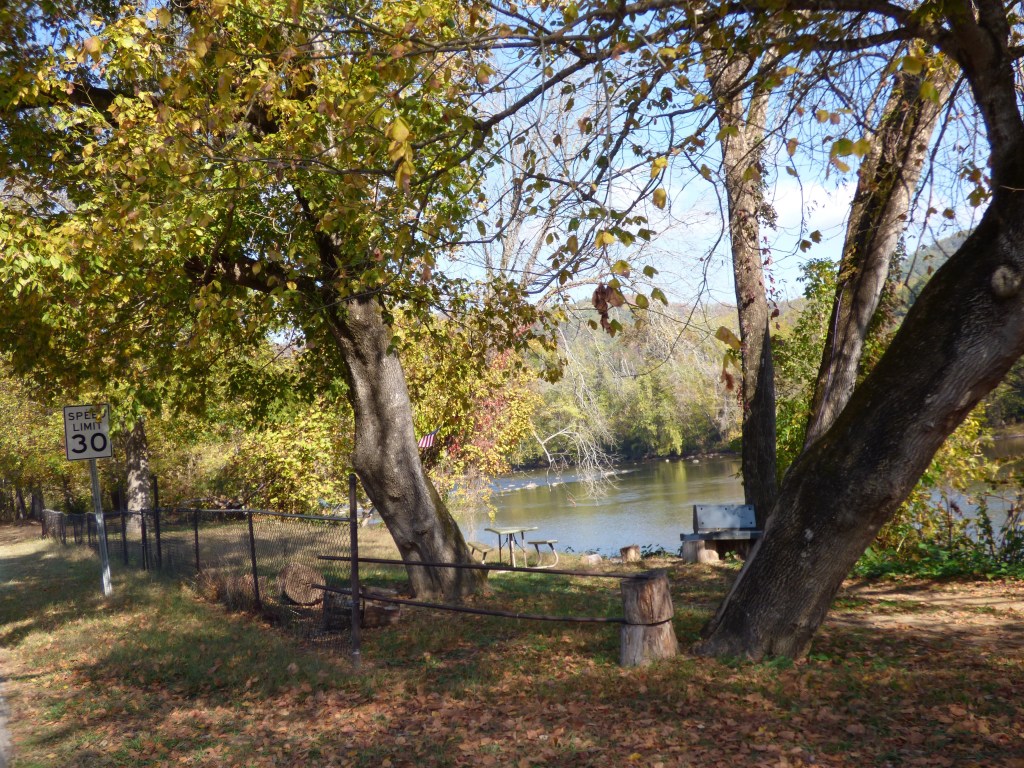
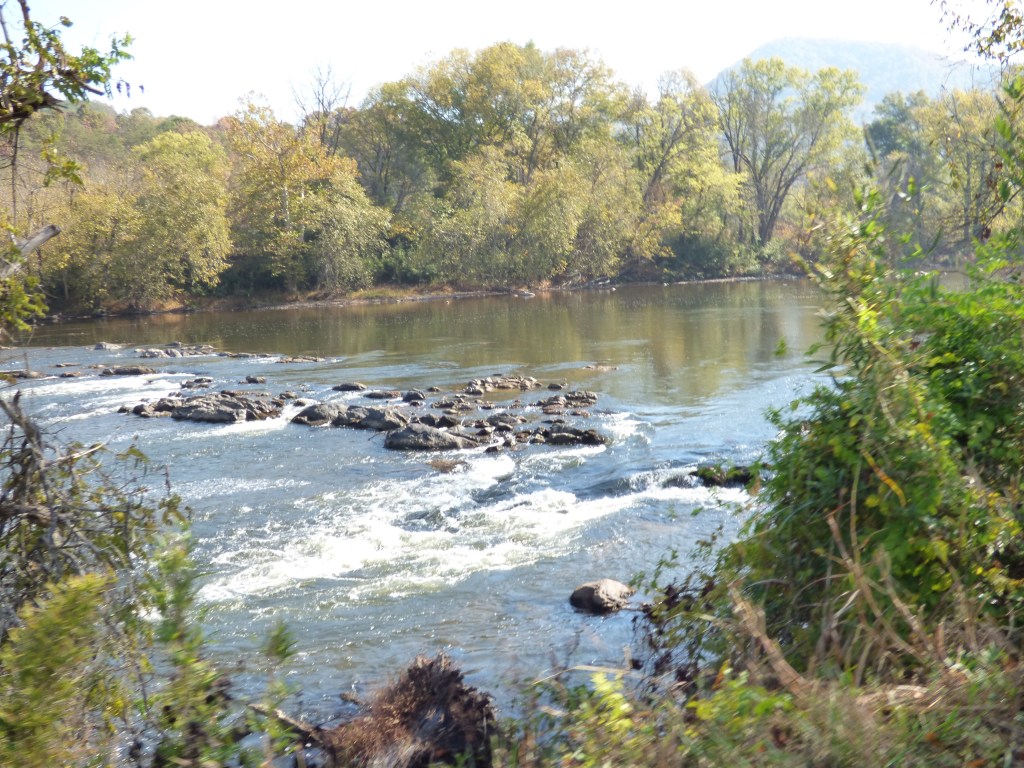
This was us on the bank of the French Broad last year. All gone now …
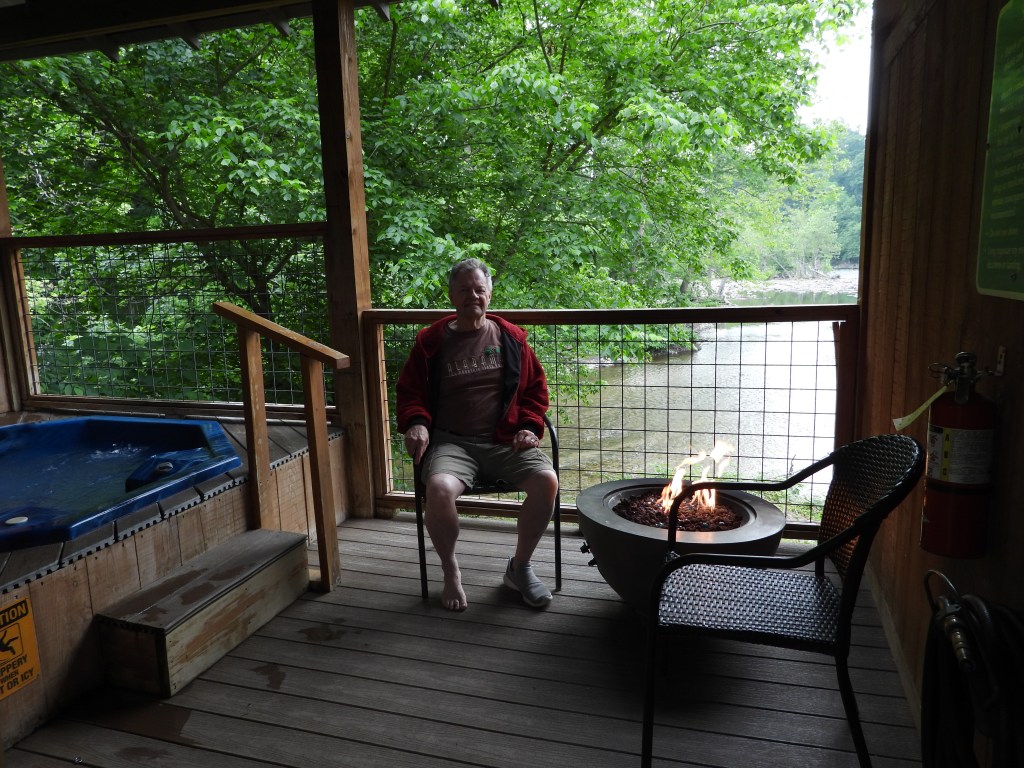
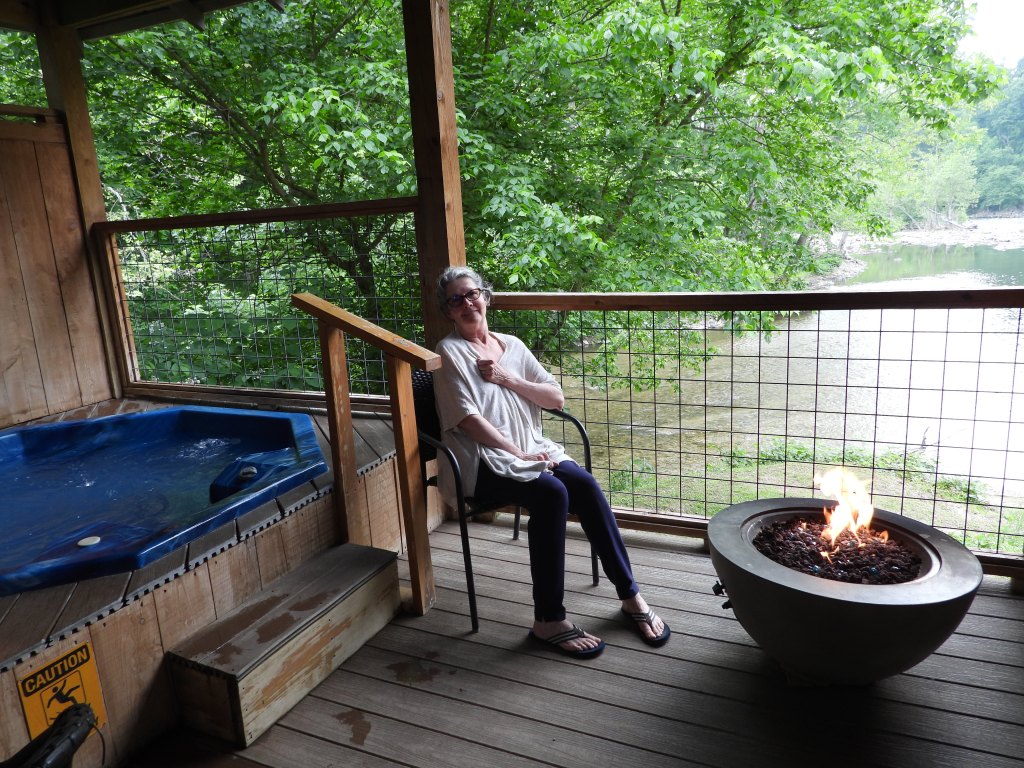

At the water intersection of the French Broad River and Spring Creek leaving Hot Springs, North Carolina toward Paint Rock and Tennessee. Hot Spring Resorts and Spa – the water was several feet higher than the roofs of the mineral bath huts.
They will rebuild.

 Cherie Lynn's Herstory
Pingback: Knight McKnight y-DNA Along The Great Wagon Road – The Great Philadelphia Wagon Road
Pingback: Ancestor Tours ~ World Travel with Genetic Genealogy – The Great Philadelphia Wagon Road
Pingback: Knight McKnight Y-DNA along the Great Philadelphia Wagon Road | Cherie Lynn's Herstory